Applied research and practice
Leadership assessment centred on a shared sense of “us”.
Use the Identity Leadership Inventory (ILI) to assess how leaders create, advance, represent and embed a shared sense of “us” with the groups they lead. Use the findings to focus leadership development and evaluate progress.
The research behind the assessment
Leadership starts with a shared sense of “us”.
The social identity approach understands leadership as a group process. It focuses on how leaders build and sustain a shared sense of who “we” are and what matters to “us”.
The Identity Leadership Inventory (ILI) assesses perceptions of four aspects of this work: creating, advancing, representing and embedding a shared identity. Feedback provides a starting point for reflection and discussion with the people you lead.

From assessment to action
Connect feedback with everyday practice.
We agree the assessment, development pathway and evaluation plan with you upfront, then use the findings to focus the work.
-
Gather perspectives
Compare leaders’ self-assessments with team feedback to understand how their leadership is experienced.
-
Explore the feedback
Discuss the findings in a facilitated debrief, identifying strengths and priorities in context.
-
Focus development
Put insights into practice through coaching, CARE reflective practice or the 5R Leadership Programme.
-
Review and refine
Review application and experiences, using follow-up assessment where agreed to inform next steps.
Inside the feedback
See what the reports help you explore.
These fictional examples show how ILI feedback can support a debrief and a later review. The findings are interpreted alongside the leader’s context and experiences with their group.
Baseline assessment
Understand different perspectives.
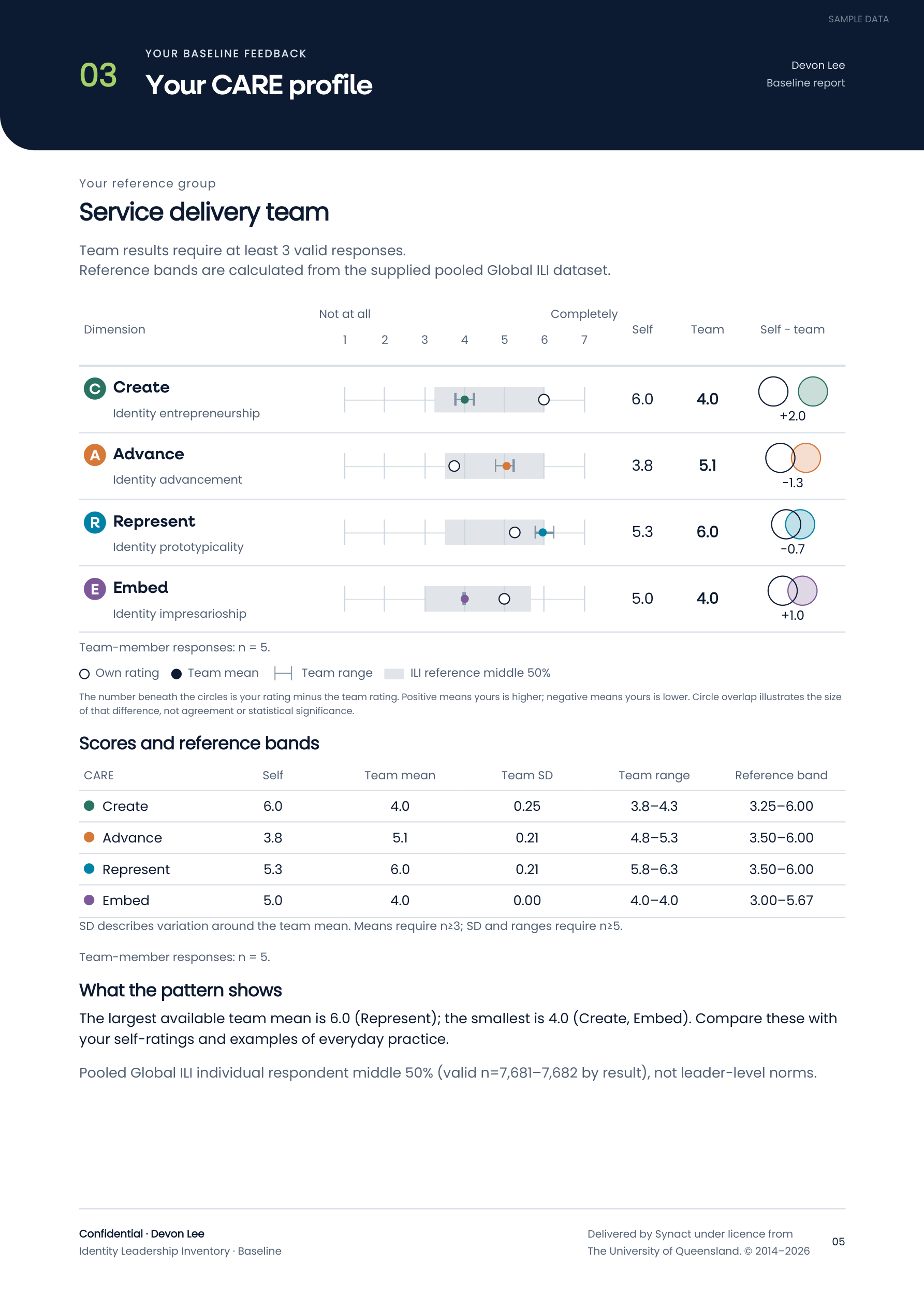
The CARE profile brings self-ratings and team feedback together. A debrief explores where perspectives align, where they differ and what those differences might mean in everyday work.
A question for the debrief Where do you and your team see things differently—and what examples could help you understand why?
Follow-up assessment
Revisit the picture over time.
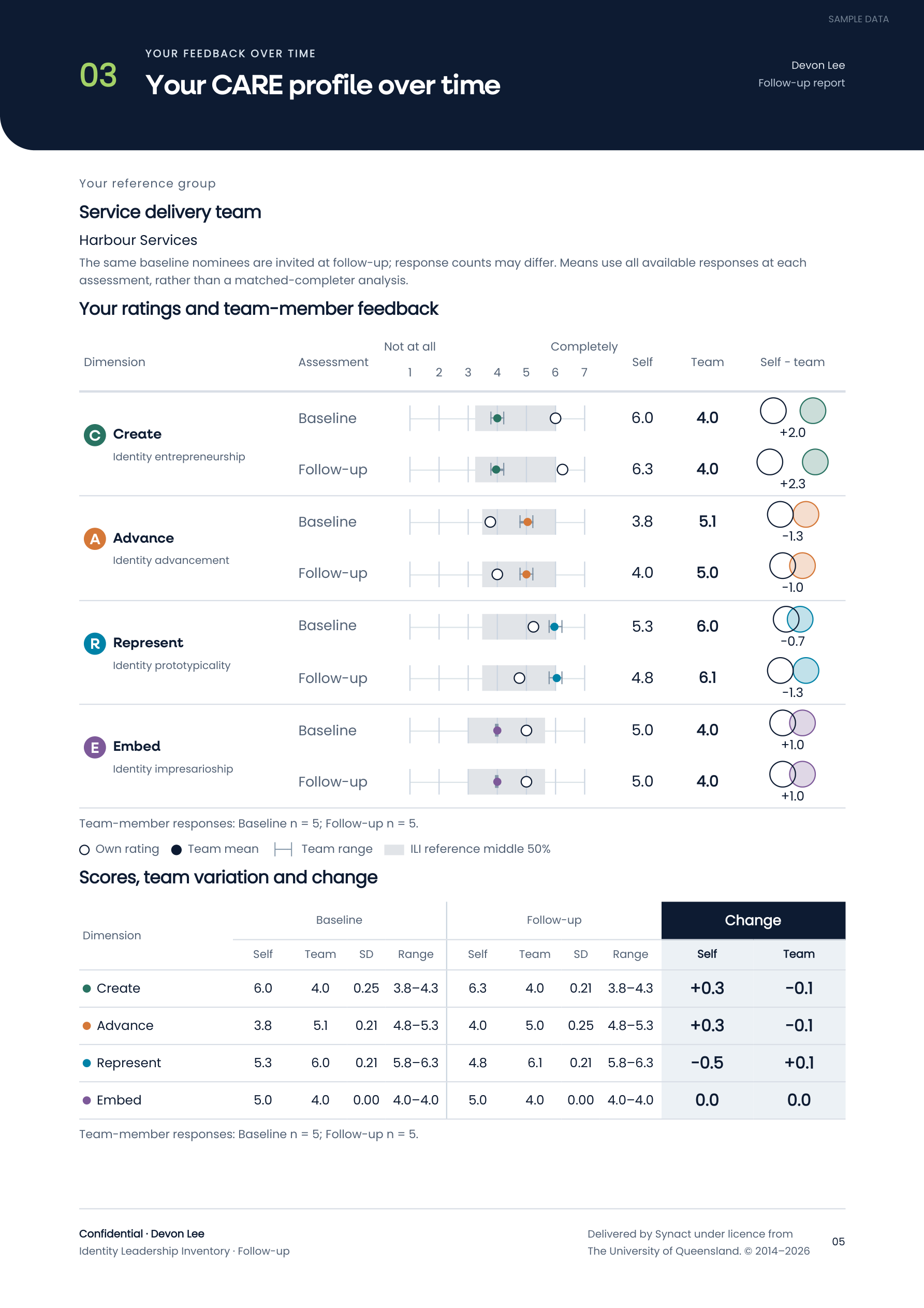
Where follow-up assessment is agreed, the report places baseline and later feedback side by side. Explore what changed, what stayed similar and what to carry forward.
A question for the review What did you put into practice, and how does the feedback relate to what you and your team experienced?
Score changes alone do not establish programme impact. Interpretation considers who responded, the group’s circumstances and other evidence of application.